Particulate matter and coal dust: Difference between revisions
| Line 2: | Line 2: | ||
Airborne particles––also known as particulate matter (PM), particulates, or aerosols––refer to any mixture of solids and liquid droplets in the atmosphere. Particles can be directly emitted into the air or formed through chemical reactions of gaseous pollutants. | Airborne particles––also known as particulate matter (PM), particulates, or aerosols––refer to any mixture of solids and liquid droplets in the atmosphere. Particles can be directly emitted into the air or formed through chemical reactions of gaseous pollutants. | ||
Particles are often distinguished by their size. The terms PM<sub>1</sub>, PM<sub>2.5</sub>, and PM<sub>10</sub> are common ways particles are described, measured, and regulated, with the number | Particles are often distinguished by their size. The terms PM<sub>1</sub>, PM<sub>2.5</sub>, and PM<sub>10</sub> are common ways particles are described, measured, and regulated, with the number indicating the diameter of the particles in micrometers. Particles can also be discussed in the terms of very-fine (PM<sub>1</sub>), fine (PM<sub>2.5</sub>), and coarse (PM<sub>10</sub>) particles, with PM<sub>10</sub> generally referring to as dust. Particle size, composition, and shape affect how particles are [[Regulation under the Clean Air Act|regulated under the U.S. Clean Air Act]] and their [[Health impacts: particles and coal dust|health impacts]]. | ||
== Coal Dust == | == Coal Dust == | ||
Coal dust is a type of particulate matter that contains coal. Coal dust is produced through physical processes that wear on the brittle coal rocks during mining, transport, and storage to generate | Coal dust is a type of particulate matter that contains coal. Coal dust is produced through physical processes that wear on the brittle coal rocks during mining, transport, and storage to generate coal particles that are then uplifted to the atmosphere and carried by winds. As a result, coal dust particles tend to be larger in size, including PM<sub>2.5</sub> and PM<sub>10</sub>, as well as even bigger PM that is visible with the unaided eye.<ref>Li, et al., [https://www.sciencedirect.com/science/article/abs/pii/S0032591016300341 Experimental Research of Particle Size and Size Dispersity on the Explosibility Characteristics of Coal Dust], ''Powder Technology'', 292, 290–297, 2016. </ref> Coal dust is lost from the atmosphere through settling and deposition, leaving black dust films on outdoor and indoor surfaces. Coal dust contains toxic heavy metals that have serious [[Health impacts: particles and coal dust|health impacts]] at ambient concentrations and exposures below the [[U.S. Environmental Protection Agency (EPA)|U.S. Environmental Protection Agency]] [[Regulation under the Clean Air Act|National Ambient Air Quality Standards (NAAQS)]]. | ||
== Coal Dust Emissions == | |||
Coal dust is emitted to the air from the coal terminals in Southeast Newport News and Lambert's Point by various physical disturbances that unsettle the coal particles and uplift them into the air. The distance traveled by the airborne particles depends on the size of particulate matter, with smaller particles generally reaching farther distances, and the conditions in the atmosphere. Physical disturbances include weather and wind patterns and the transporting and handling of coal. | |||
=== Wind and weather disturbances === | |||
* Coal is stored in large open piles allowing for stockpile wind erosion and coal particles to easily become airborne. | |||
* Wind speed influences coal dust particle concentration, with higher wind speeds associated with higher airborne particle concentrations. As wind speed increases, atmospheric particulate matter in the air increases, the rate of diffusion accelerates, and there is an overall increase in dustfall fluxes of pollutant particulates such as coal. | |||
* Wind direction can determine emission travel. Both particulate matter and black carbon air pollution have been found to be of greater concentration when downwind of the terminal, shown at the Curtis Bay coal terminal. | |||
* Rain events are associated with lower coal dust concentrations as the water droplets saturate airborne particles and return them to the surface through deposition, in a similar way that sprayers are used in [[Wet Dust Suppression|wet dust suppression]].<sup>1</sup> | |||
* Relative humidity influences coal dust particle size, with higher humidity associated with larger particle matter as the dust particles clump together. | |||
** Lower humidity may increase the concentration of fine dust particles which penetrate more deeply into lungs and cells, posing a serious public [[Health impacts: particles and coal dust|health concern]]. | |||
* The Virginia Air Pollution Control Board conducted a study published in January 1987 which determined the mathematical formula (Equation 1.1) for the “Effective wind forces” (K<sub>t</sub>) on the coal piles at the terminal in Newport News, which is influenced by: | |||
** SP = wind speed | |||
** T = temperature | |||
** RH = relative humidity | |||
** P = air density | |||
** μ = air viscosity | |||
This model was used to predict the emissions of coal dust based on these various conditions, and how to optimize wet dust suppression with sprayers. | |||
=== Coal transporting and handling disturbances === | |||
'''Transportation of coal:''' The transport of coal in uncovered open-top rail cars results in significant amounts of coal dust being emitted into the air by the jostling of the rail cars or due to wind and weather. Along the transportation route, coal dust can blow over residential and agriculture areas, polluting the air, crops, and waterways. The company BNSF has conducted studies that indicate 500 lbs to 1 ton of coal can escape from a single coal car during travel along a railway. | |||
Coal handling: Loading and unloading piles of coal from rail cars into coal piles can unsettle dust particles which get released into the air. | |||
** Equipment at the terminal which manages and moves coal piles, such as bulldozers and conveyor belts, can release coal dust into the air. | |||
** The transfer of coal onto ships at the port can similarly unsettle dust particles. | |||
** In June 1989, Virginia's Department of Air Pollution Control Board set limits on the emissions from each ship unloading operation, each conveyor belt, the bucket elevator, silo airslides, and the truck loadout system to 0.3 lbs/hr for both particulate matter and PM<sub>10</sub> for each respective coal handling operation. | |||
*** In July 1994, this emission limit was increased to 1.6 lb/hr. | |||
== Documents == | == Documents == | ||
Revision as of 13:40, 23 November 2025
Airborne Particles
Airborne particles––also known as particulate matter (PM), particulates, or aerosols––refer to any mixture of solids and liquid droplets in the atmosphere. Particles can be directly emitted into the air or formed through chemical reactions of gaseous pollutants.
Particles are often distinguished by their size. The terms PM1, PM2.5, and PM10 are common ways particles are described, measured, and regulated, with the number indicating the diameter of the particles in micrometers. Particles can also be discussed in the terms of very-fine (PM1), fine (PM2.5), and coarse (PM10) particles, with PM10 generally referring to as dust. Particle size, composition, and shape affect how particles are regulated under the U.S. Clean Air Act and their health impacts.
Coal Dust
Coal dust is a type of particulate matter that contains coal. Coal dust is produced through physical processes that wear on the brittle coal rocks during mining, transport, and storage to generate coal particles that are then uplifted to the atmosphere and carried by winds. As a result, coal dust particles tend to be larger in size, including PM2.5 and PM10, as well as even bigger PM that is visible with the unaided eye.[1] Coal dust is lost from the atmosphere through settling and deposition, leaving black dust films on outdoor and indoor surfaces. Coal dust contains toxic heavy metals that have serious health impacts at ambient concentrations and exposures below the U.S. Environmental Protection Agency National Ambient Air Quality Standards (NAAQS).
Coal Dust Emissions
Coal dust is emitted to the air from the coal terminals in Southeast Newport News and Lambert's Point by various physical disturbances that unsettle the coal particles and uplift them into the air. The distance traveled by the airborne particles depends on the size of particulate matter, with smaller particles generally reaching farther distances, and the conditions in the atmosphere. Physical disturbances include weather and wind patterns and the transporting and handling of coal.
Wind and weather disturbances
- Coal is stored in large open piles allowing for stockpile wind erosion and coal particles to easily become airborne.
- Wind speed influences coal dust particle concentration, with higher wind speeds associated with higher airborne particle concentrations. As wind speed increases, atmospheric particulate matter in the air increases, the rate of diffusion accelerates, and there is an overall increase in dustfall fluxes of pollutant particulates such as coal.
- Wind direction can determine emission travel. Both particulate matter and black carbon air pollution have been found to be of greater concentration when downwind of the terminal, shown at the Curtis Bay coal terminal.
- Rain events are associated with lower coal dust concentrations as the water droplets saturate airborne particles and return them to the surface through deposition, in a similar way that sprayers are used in wet dust suppression.1
- Relative humidity influences coal dust particle size, with higher humidity associated with larger particle matter as the dust particles clump together.
- Lower humidity may increase the concentration of fine dust particles which penetrate more deeply into lungs and cells, posing a serious public health concern.
- The Virginia Air Pollution Control Board conducted a study published in January 1987 which determined the mathematical formula (Equation 1.1) for the “Effective wind forces” (Kt) on the coal piles at the terminal in Newport News, which is influenced by:
- SP = wind speed
- T = temperature
- RH = relative humidity
- P = air density
- μ = air viscosity
This model was used to predict the emissions of coal dust based on these various conditions, and how to optimize wet dust suppression with sprayers.
Coal transporting and handling disturbances
Transportation of coal: The transport of coal in uncovered open-top rail cars results in significant amounts of coal dust being emitted into the air by the jostling of the rail cars or due to wind and weather. Along the transportation route, coal dust can blow over residential and agriculture areas, polluting the air, crops, and waterways. The company BNSF has conducted studies that indicate 500 lbs to 1 ton of coal can escape from a single coal car during travel along a railway.
Coal handling: Loading and unloading piles of coal from rail cars into coal piles can unsettle dust particles which get released into the air.
- Equipment at the terminal which manages and moves coal piles, such as bulldozers and conveyor belts, can release coal dust into the air.
- The transfer of coal onto ships at the port can similarly unsettle dust particles.
- In June 1989, Virginia's Department of Air Pollution Control Board set limits on the emissions from each ship unloading operation, each conveyor belt, the bucket elevator, silo airslides, and the truck loadout system to 0.3 lbs/hr for both particulate matter and PM10 for each respective coal handling operation.
- In July 1994, this emission limit was increased to 1.6 lb/hr.
Documents
- Viney P. Aneja, Priya R. Pillai, Aaron Isherwood, Peter Morgan & SaurabhP. Aneja (2016): Particulate matter pollution in the coal-producing regions of the Appalachian Mountains: Integrated ground-based measurements and satellite analysis, Journal of the Air & Waste Management Association. October 12, 2019.
- Coal Dust Residues on Homes in Southeast Newport News, 2024–2025 Photographs
-
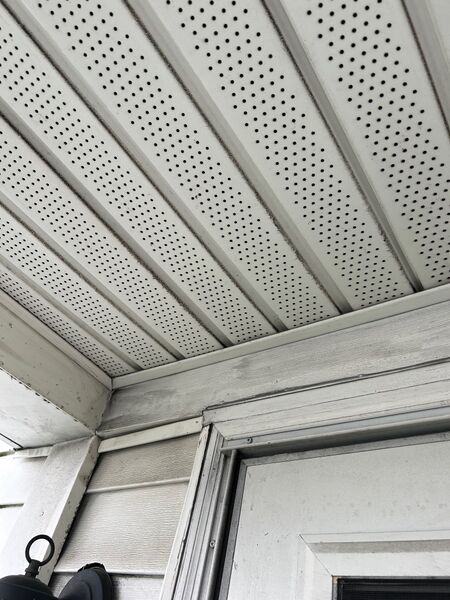 Coal Dust Residues
 -
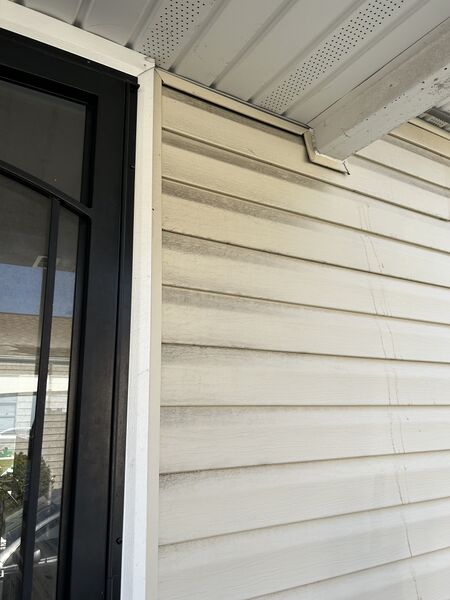 Coal Dust Residues
 -
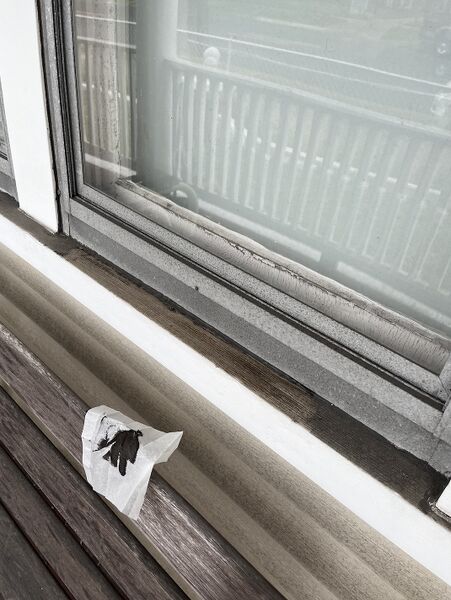 Coal Dust Residues


References
- ↑ Li, et al., Experimental Research of Particle Size and Size Dispersity on the Explosibility Characteristics of Coal Dust, Powder Technology, 292, 290–297, 2016.